
After years of in-person programs we asked a simple question:
What if technology could teach reading at scale?
To answer it, we turned to our longtime partner and biggest supporter—General Electric. For years, GE had been volunteering and funding WGI's literacy programs in the markets where it operated around the world. As the world's digital industrial company, GE was the natural partner to help us evolve from in-person classrooms to technology-enabled learning.
Together, we built Lyra: a mobile app designed to teach phonics through speech recognition and adaptive learning. We launched it globally, offered it for free to anyone who needed it, and announced the partnership with a joint press release that reached audiences across continents.
The reach was truly global.
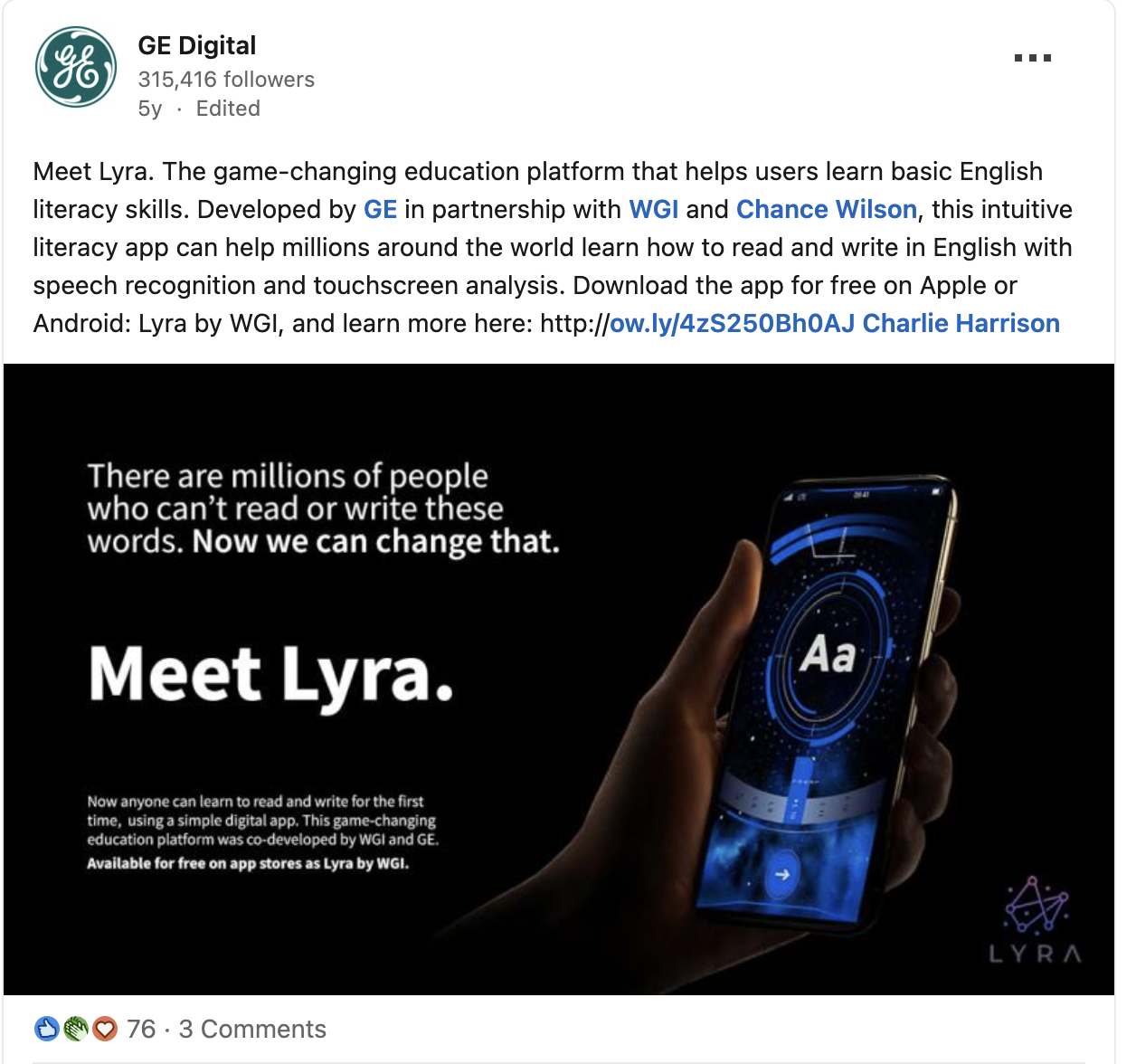
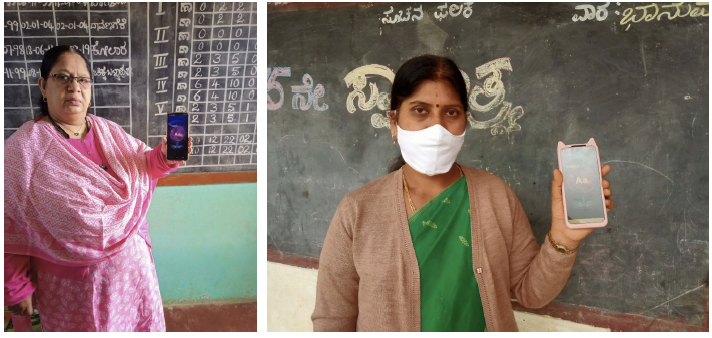
From rural schools in Telangana, India (pictured below) to urban classrooms in Princeton City, Ohio, students were using Lyra thanks to introductions made possible through GE's global network. We piloted the platform in school districts in New York, Louisiana, and Ohio. Technology partners like Dell donated brand new Chromebooks to get devices into students' hands. Community organizations integrated Lyra into their programs. Thousands of learners downloaded the app. Educators saw its potential and wanted to keep moving forward.
And then we hit reality.
The technology, as powerful as it seemed in 2020, wasn't ready for what we were asking it to do. Speech recognition couldn't personalize the way each child needed. Keeping students engaged beyond the first few sessions proved difficult. Language and cultural differences created barriers we hadn't fully anticipated.
We were too early for the moment. Lyra worked for some. For others, it fell short. We learned what content could do and what it couldn't. We learned that apps can teach, but they can't guarantee that learning actually happens. And we learned that to solve this problem at the scale we envisioned, we'd need to go back to the drawing board.
That moment has arrived.
The world is different now. Post-COVID learning loss has devastated a generation. Before the pandemic 57% of 10-year-olds in low- and middle-income countries couldn't read a simple story. Today that number has surged to 70%. At the same time AI has leapt forward in ways that seemed impossible just a few years ago. The technology that couldn't personalize in 2020 can now adapt in real time. The barriers we faced then are solvable today.
Through our new for-profit mission driven arm WGI Interactive LLC we're building something new: a solution powered by the latest advances in AI, informed by everything we learned from Lyra 1.0, and designed to accomplish what we couldn't originally: guarantee that every child learns to read.
We're not ready to share the details yet. But the goal remains the same. And this time, we have what we didn't have before: the technology to make it possible, the experience to build it right, and the urgency to act now.